4 pieces of creative writing advice that changed my approach to writing and that I often reiterate in my dev. editing practice
- Follow the heat
I first heard this directive, or mantra, from Chelsea Hodson, author of the essay collection Tonight I’m Someone Else, in an essay class she taught in 2024. The class was primarily generative, and Hodson repeated this phrase before students began writing based on a prompt at the beginning of each class. Though the class was focused on personal essay, the mantra can be applied to fiction as well.
Following “the heat” means intuiting where the charged energy of a story is, and embracing the fact that we’re going to face resistance, and then going after the heat anyway.
Following the heat is part of the drafting process and the revision process. It can also mean asking ourselves what about our story feels “dangerous” to say in writing? To even put into words?
The heat, or the real “heart” of a story, might be buried in-scene, or in exposition; it might be an interaction that a character has with an ex that makes you think he said WHAT and you just move on?! Or something more subtle, like a realization, a small shift in perspective, that the narrator casually mentions and then never touches on again. The heat is elusive, can come from anywhere, and often sneaks up on us when we’re least expecting it.
- Real people are messy. Reveal contradiction.
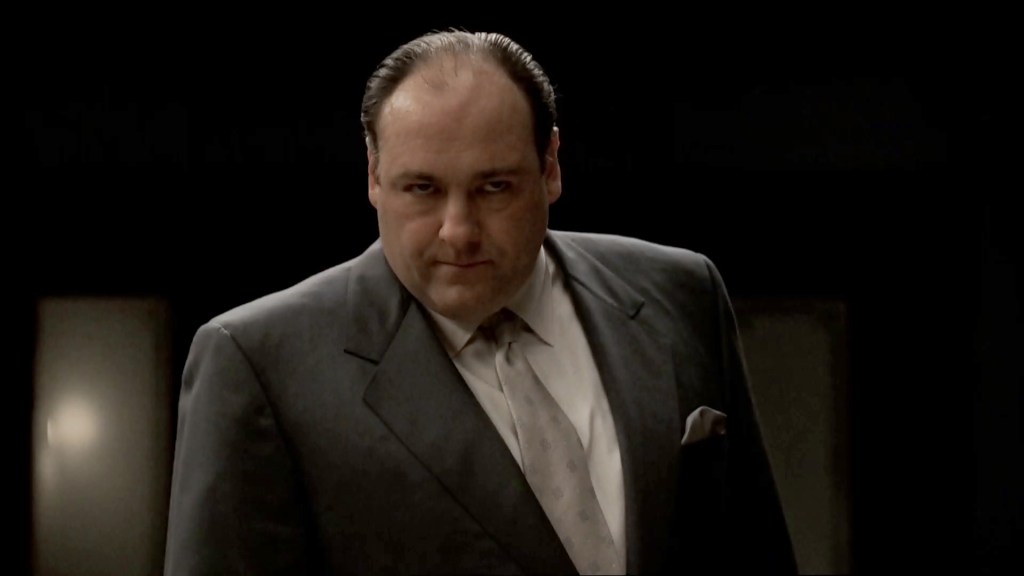
Humans are inherently contradictory creatures. We say one thing and mean another. We claim we care about the environment but when we’re tired we throw away our dirty peanut butter jars instead of washing and recycling them, and casually claim recycling is fake anyways. Or we’re loving parents who would do anything for our children, but we also work for the mafia and take pleasure in killing people. We constantly make exceptions to rules we claim everyone should follow. If in developing a character we realize they are starting to feel too cookie-cutter, too seamless, we can place them in a scenario where they contradict themselves to create friction. It’s only human.
- Verb vibes
Paying attention to verbs is a great revision technique for any type of creative writer, but especially those of us who prefer the revision process to the mess of the generative. It’s a technique that feels a bit like cheating because all it takes is basic math and a thesaurus, which within the absolute chaos-realm that is trying to revise a first draft provides the blissful, short-lived illusion of control.
In Alexander Chee’s essay collection How to Write an Autobiographical Novel, Chee waxes poetic on his time at Iowa studying under the legendary Annie Dillard. In addition to taking us on a tour of Dillard’s quirks and effortless cool—the smoking, the full carafe of coffee, the butterscotch candy addiction—Chee walks the reader through his greatest take-aways he gained as her student.
Dillard excessively marked up her student’s drafts, often writing a total verb count at the top of each page for the writer to address in revision.
One of the easiest ways to generate more movement and vitality in our writing is to add more verbs. As an exercise, I often print out a single page of writing that fills me with sinking dread when I read it. Then I take a red, or blue, or any differently-colored pen and circle each and every verb on the page.
Going back to the screen, I challenge myself to double the amount of verbs. If I had almost no verbs, like five or six on the whole page, I’d triple them. I push beyond the threshold of necessary verbs, and then I pare them back. It’s not at all surprising that adding verbs can make a piece of writing so much more alive and vibrant, but it is surprising how easy it is to miss adding them in the first place.
- Exposition is good!
Readers like context and exposition. We like it! If you’ve ever read a novel and enjoyed it, you too have enjoyed exposition, which Merriam-Webster rather obliquely defines as “a setting forth of the meaning or purpose (as of a writing).” Exposition is the necessary context and background information we need to understand basic details about a story, but it’s also a narratively rich space where meaning and purpose are manifested.
In personal writing, exposition is one of the first things writers shy away from, for fear that we’re going to bore the reader with all our “unnecessary detail.” In fiction, this fear takes the form of delayed information, wanting to withhold necessary context about our characters for a later chapter or scene (or withhold entirely) in order to keep the reader in a state of tension or suspense.
Most of the canonical writing advice we receive trickles down from Fiction Writing, which stresses showing versus telling. Personal narrative is all about telling. Great fiction needs a balance.
The celebrated novelist and writing teacher Brandon Taylor has a whole post on this over at his delightful Substack newsletter, Sweater Weather, where he says a lot of great and helpful things like the following:
In telling authors to write the boring draft, to try to bore me, what I’m trying to do is free them up from judgement and to get out of their own way, knowing very well that they probably won’t bore me at all. They are good writers. They are strong writers. Asking them to be boring for a draft is just a ploy to get them out of the rut of their usual thought patterns and to invite them into a different mode of engagement with the worlds of their making. I want them to see their world naively, without the benefit of knowing what is next and without the terrifying acuity of having read a great many books. What would a person, upon first encounter, think to ask of this scene, this moment, these people?
Happy writing!


Leave a Reply